Why Gauge Swatching Matters—and How to Make One the Right Way
If you’ve ever finished a knitting or crochet project only to discover it’s too big, too small, or simply not the shape you expected, you’ve met the consequences of skipping a gauge swatch. Though many crafters are tempted to dive right in, taking the time to make a proper gauge swatch can save hours of frustration and ensure your finished piece turns out exactly as intended.
Why Gauge Matters
Gauge refers to the number of stitches and rows per inch in your project. Even when two people use the same yarn and hook or needle size, their tension can vary significantly. One crafter might naturally stitch tightly, while another works more loosely. That small difference adds up—especially in garments or anything that needs to fit.
Patterns are written based on a specific gauge. If your gauge matches the designer’s, the finished measurements will match too. If it doesn’t, your sweater could turn out a size too small, or a blanket may come out much larger than expected. Swatching ensures that what you create aligns with the pattern, the yarn, and your personal tension.
How to Make a Gauge Swatch
- Use the same yarn and tools you plan to use in the project.
This includes brand, fiber content, and needle or hook size. Subtle differences affect the final gauge. - Make a swatch larger than the measurement you need.
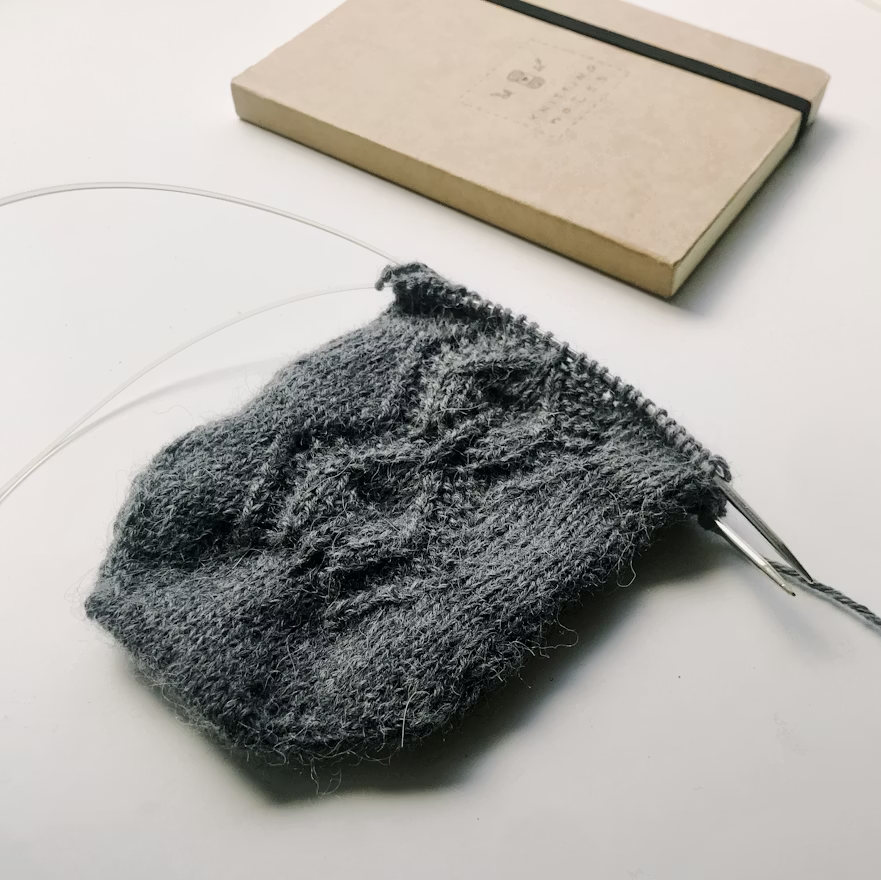
If the pattern calls for a 4″ x 4″ (10 cm x 10 cm) gauge, make a swatch at least 6″ (15 cm) square. This allows for more accurate measuring and eliminates edge distortion. - Work in the stitch pattern specified.
Many patterns specify stockinette, double crochet, or another specific stitch. Always match the pattern’s gauge instructions. - Wet block or steam your swatch.
This step is crucial because fibers relax or bloom after washing. Treat the swatch exactly as you will treat the final project—wash, block, and dry it. - Measure in the center of the swatch.
Use a ruler or gauge tool to count stitches and rows over 4 inches (or 10 cm), avoiding edge stitches. - Adjust as needed.
Too many stitches? Try a larger needle or hook. Too few? Go smaller. Repeat the swatch until it matches the pattern’s gauge.
Taking the time to swatch may feel like an extra step, but it’s truly the foundation of a successful project. Once you see how much it improves fit, consistency, and confidence, it becomes a joyful—and essential—part of the creative process.